Posts

Preview

Disability Is Not a Synonym for Vulnerability.

Image
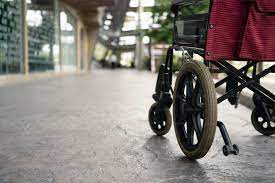
Written by a disability rights advocate who’s tired of listening to the same tired script. For years, policy documents, humanitarian appeals, and development reports have repeated a familiar line: “ Persons with disabilities are among the most vulnerable. ” It appears in funding proposals, emergency response plans, and government strategies. It is rarely questioned. But perhaps it should be. Disability is not a synonym for vulnerability. And when we treat it as such, we risk misunderstanding both disability and vulnerability itself. A physical impairment does not automatically produce risk. What produces risk are systems, such as inaccessible infrastructure, discriminatory attitudes, weak institutions, poverty, conflict, and exclusionary policies. A wheelchair does not make someone vulnerable. A staircase without a ramp does. A hearing impairment does not exclude a person from information. The absence of sign language interpretation does. The difference matters. When di...

Beyond Sympathy: Redefining Inclusion for Persons with Disabilities

Image
Redefining Inclusion for Persons with Disabilities In a society that often highlights the limitations of individuals with disabilities rather than their abilities, the journey toward authentic inclusion has been both long and complex. Historically, people with disabilities have faced systemic exclusion, not because of an inherent lack of capability, but due to deeply ingrained societal biases. In recent years, however, there have been significant strides toward fostering inclusion and creating equal opportunities for persons with disabilities. While these efforts are commendable, they have inadvertently introduced a new challenge often referred to as the "DEI bias" (Diversity, Equity, and Inclusion). This bias stems from the misguided assumption that individuals with disabilities who achieve success or occupy prominent roles have done so primarily due to sympathy or preferential treatment rather than their qualifications or merit. This misconception creates an additional laye...

Take A Deep Breath And Keep Moving

Image
To all my young people graduating this year  When I graduated from Makerere University many years ago, my dream was that by now, I would be living a lavish life—rich, with my wife and children, in a grand mansion on a picturesque Lake Victoria island.  Why that remains a dream, well, I can explain  But before I delve into that, I want you to know that one of two things will happen for you. You'll either become as wealthy as the man in my dreams, or you'll join the majority—the majority who struggle to find a job, who progress slowly, and who face life's challenges head-on. If you find yourself in the majority, here’s my advice: TAKE A DEEP BREATH AND KEEP MOVING. In a few years, you might see your classmates or even juniors holding important positions in the public or private sector. On a tough day, after dropping off your 60th CV and walking 20 kilometers on an empty stomach, you might encounter an old schoolmate in a luxury car who asks, "So, what are you up to these...

The Stark Reality Bridging the Financial Inclusion Gap for Persons with Disabilities

Image
The financial exclusion of persons with disabilities (PWDs) is a pressing issue, exacerbating poverty and hindering economic growth in East Africa. According to World Bank (2019). "Disability Inclusion Overview" global discourse often highlighting the importance of financial inclusion, but the reality on the ground tells a different story. PWDs in the global south face numerous barriers, including inaccessible banking services, lack of assistive technologies, and pervasive societal stigma ​​ . In many countries, banking infrastructures are often not designed to accommodate individuals with physical disabilities. Financial institutions seldom invest in technologies that would make banking more accessible, such as ATMs with audio instructions for the visually impaired. Consequently, many PWDs are left without basic financial services, trapped in a cycle of poverty and exclusion. A Specialist’s Perspective As a disability inclusion specialist from Uganda, I have witnessed ...

Beyond Progress: Crafting a Future of Inclusive Diversity

Image
T he disability rights movement has made immense progress over the years, we still have a long way to go. One facet of this evolution that deserves our attention is the future of disability inclusion. It's not just a moral imperative; it's also a smart business move. Although t he future of disability inclusion is not a distant destination but a continuous journey. It requires a collective call to action from organizations, communities, and individuals. By embracing these practical strategies, we move beyond rhetoric to effect tangible change, creating workplaces and communities where diversity is not only acknowledged but actively celebrated. In this article , we will explore the trends and next steps that potentially can shap e the future of disability inclusion in professional environments and communities . Current Trends: As we stand on the cusp of transformative change, several ongoing trends are reshaping the landscape of disability inclusion, heralding a future ...

"If your own don't protect you, the world won't". The Relevancy of Self Advocacy For People with Disabilities

Image
While we may rely on the support and protection of others, ultimately, it is up to us to ensure that we are safe and secure.  The statement "if your own don't protect you, the world won't" highlights the importance of taking responsibility for our own well-being and safety.  In this context, the statement "if your own don't protect you, the world won't" takes on added significance. For individuals with disabilities, this means that it is essential to advocate for their own needs and rights, while also recognizing the importance of broader social and policy-level change. While progress has been made in recent years to promote disability inclusion, there is still much work to be done. According to the World Health Organization (WHO), people with disabilities are more likely to experience poverty, social exclusion, and discrimination than those without disabilities. This can be especially true when it comes to employment, where individuals with dis...

Better Accessible Than Empty Apologies

Image
There`s an old proverb that says “ An empty apology is like a blank piece of paper, it may hold some value, but it remains meaningless " . Looking at the daily atrocities people with disabilities face in pursuit for employment, it's important to reflect on the timeless truth of this adage. Despite the fact that approximately one billion people worldwide, accounting for around 15% of the global population, live with some form of disability, individuals with disabilities continue to receive empty promises and insubstantial apologies with regards to accessibility in the workplace and employment opportunities. It's high time for employers to recognize that accessibility is not merely a legal obligation, but a moral imperative. In this article, we will delve into the significance of accessibility in the workplace and offer practical solutions for employers seeking to make their workplaces more accessible. As employers, it is your sole responsibility to ensure that all you...